The Woman in Cabin 10

The Woman in Cabin 10 came out in 2016, and I finally finished it this month. 

Here’s a general preface — I don’t often read mystery/thriller/horror. At all. I’ll occasionally read something if it seems part of a cultural reset, like Gone Girl or Murder on the Orient Express. I found the book at my local Goodwill Bookstore for $1.50 and my girlfriend had the paperback copy, so we decided to read it together on our weekend getaway to Big Bear. Even though this book takes place on a luxury cruise ship, it still felt apt to read it in a cabin. 

A quick summary: Laura “Lo” Blacklock is a travel journalist whose big break may be coming up in the form of the once-in-a-lifetime opportunity to aboard the maiden voyage of the Aurora, a boutique yacht set to sail on the seas of Norway, under the famed Aurora Borealis. The ship is filled with press, royalty, and the extremely wealthy, spread over ten opulent cabins. The story begins, however, with a burglary that’s meant to undermine everything Lo says henceforward. Her experience being intruded upon in the middle of the night makes her paranoid and afraid, so when she thinks she hears a passenger being thrown overboard, when she sounds the alarm — people only tentatively appease her. Couple her as a victim with a drinking problem, and then add that she’s on medication for anxiety and depression — and you have a classic unreliable character. 

Unfortunately for Lo, not only is she established as an unreliable character, she’s unlikable. She possesses no charm or humor, and she isn’t described as overwhelmingly beautiful. Moreover, she’s vapid and shallow, and kind of a bitch to her boyfriend, without any real explanation. She was annoying and when a book is written in the “I” format, which I’m sure was a choice, you feel annoyed at all times. Overall, the writing to me felt lazy. There are one too many questions left at the end of the mystery, and yet not ones that really itch you to understand. Just questions that showcase the lack of good storytelling. I wasn’t ever gripped by the tale, and the twist was a little odd. A lot of reviewers on Goodreads compared the book to The Girl on the Train, which I genuinely cannot remember if I finished. So if that’s a book you’ve read and enjoyed, you may like The Woman in Cabin 10.

It reminded me sort of Agatha Christie’s Murder on the Orient Express in that there could only be a finite number of suspects for what had to have been the murder of at least one passenger aboard the cruise ship. However, I didn’t like that instead of keeping it to the finite number of passengers, and creating a backstory for each of those characters, the author decided to extend outwards to the entire staff, including the waitstaff and the sailors. There were too many details when you involve so many characters. It got repetitive in that regard, as well. The same questions, the same lack of credibility, and then suddenly Lo’s locked up somewhere. 

Perhaps it was also a little hard to follow in the beginning as I switched from reading a hardback cover, to listening to the audiobook (which mixed English, Norwegian, and New Jersey accents) and then finally as an e-book. So maybe that’s on me. The book received a 3.7/5 on Goodreads, and I could only give it a generous 2.5. It wasn’t a quick read for me, even though the language is easy to understand, just because of how unlikable Lo was. I’m glad I finished it to say I did, but I definitely couldn’t recommend it in good faith. That isn’t to say it’s a bad book, it just wasn’t quite my cup of tea.

Promptly after finishing this book and taking the necessary photo, I dropped it off at my local little library, perhaps for someone else to enjoy better than I did.

My Go-To Book Recommendations (Fiction)

I’ve always loved reading. It’s hard to believe for most, but I’ve loved reading ever since I was a child. The oldest form of escape, I would spend entire summers walking to the library a few blocks away and stay up all night finishing novels. Think of the way Matilda discovered her local library, and would bring a wagon with her, quickly making her way through children’s books towards the classics. I still have a soft spot for Jane Eyre and A Tale of Two Cities… but also The BFG and Lemony Snicket’s A Series of Unfortunate Events.

It also should be said that I veer towards books that make you feel something. Usually unmistakeable grief. I like a decent beach read the way anyone might, but I don’t find myself ever thinking about them again once the last page has been turned. (Ex: Books like Twilight by Stephenie Meyer and Crazy Rich Asians by Kevin Kwan come to mind.) Below are books that are always in the back of my brain somewhere, ones I readily recommend, especially to people who don’t read often, because these books just grip you one way or another. These are very brief descriptions of some of my all-time favorite books, but I encourage you to click on the links to their Goodreads pages and read in-depth reviews if you’d like a more encompassing synopsis and preview. You might also notice each are over 4 (out of 5) stars on Goodreads — trust me, I won’t lead you astray! Not on this “official” list, but I also highly recommend The Vanishing Half, by Brit Bennett, to which I dedicated its own post here

In Cold Blood by Truman Capote

Without further ado, my go-to list of all time favorite [fiction] recommendations! (I’ve also been reading a lot of nonfiction, so I will be compiling my list of favorite nonfiction recommendations as well!)

In Cold Blood, Truman Capote 

A true-crime novel (Capote calls it the “non-fiction novel”) about a 1959 murder in Kansas; what makes it unique is the author interviews the men convicted of the crime and almost tells it from their point of view! It’s a chilling read in that regard; almost brings you inside the mind of the murderers, as Capote interviewed them multiple times while they were in jail. I read this as a junior in high school and it’s one of those books that has always stuck with me. I’ll forever recommend this book to people, especially considering how popular true crime has gotten since this book’s original publication in 1966. 

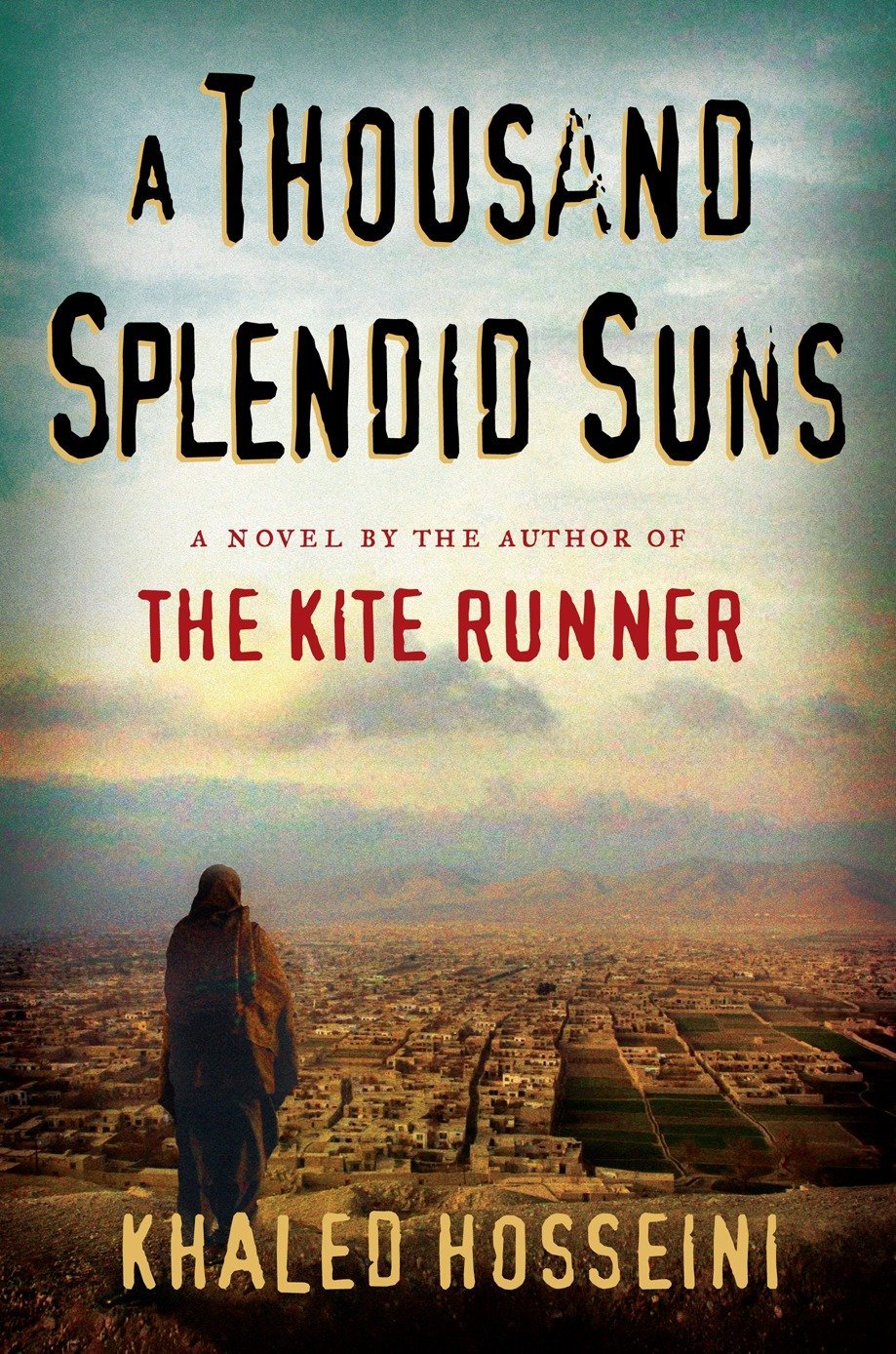
A Thousand Splendid Suns: Khaled Hosseini: 9781594489501: Amazon.com: Books

A Thousand Splendid Suns, Khaled Housseini

Also well-known for his work, The Kite Runner, which is also very good but I personally prefer A Thousand Splendid Suns because it’s the story of two extremely strong women and their lives under pre/Taliban/post rule in Afghanistan and what it really means to endure and persevere for love. It’s heart-wrenching and will make you sick to your stomach, but I think it breathes empathy into us for people we will never know, though they deserve to have their stories heard. While this is technically categorized as fiction, there is no question that the way the main characters suffer is the way women in the Middle East still suffer today.

Norwegian Wood by Haruki Murakami

Norwegian Wood, Haruki Murakami

This is probably Murakami’s most famous work — it tells the story of two people brought together by a common tragedy, and is written so vividly and beautifully, I wish it were something I read a long time ago and repeatedly afterwards. I always warn people of this book as I recommend it, because it is not best read for anyone with suicidal thoughts or deep sadness within them. It’s a hard book to read, not in skill level but it’ll ignite parts of you you may have wished remained dormant. However, if you have suffered and have made it to the other side of that hopeless suffering, you may like this. 

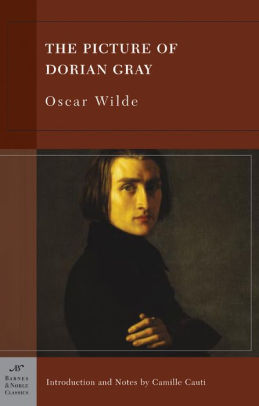
The Picture of Dorian Gray (Barnes & Noble Classics Series) by Oscar Wilde,  Paperback | Barnes & Noble®

The Picture of Dorian Gray, Oscar Wilde 

This book, written in the late 19th century, is a classic and was previously banned for its morally questioning character, but it’s written so phenomenally and not in the way most “classics” are. (i.e. boring and long-winded with too many characters to keep up with and a plot that happens in the background while you’re still trying to get through paragraph after paragraph of prose.) It’s a necessary read. The Picture of Dorian Gray is maybe surprisingly a quick read and just asks you to really consider the lengths to which you might go to be beautiful forever. However, I would also say you’ll take more from it if you spend the time to go through it’s pages with a careful and critical eye. Especially because the entire novel is completely quotable. Every other line is something you want to remember forever just for the combination of words that made their way into sentences. The language is biting and a touch cruel — you’ll disagree and be insulted because Wilde is talking about the detriments of humanity and you might think yourself above the disparage. But it is all relatable.  

“Live! Live the wonderful life that is in you! Let nothing be lost upon you. Be always searching for new sensations. Be afraid of nothing.”

An honorary (non-fiction) mention:

I Am Malala: The Story of the Girl Who Stood Up for Education and Was Shot  by the Taliban by Malala Yousafzai

I Am Malala by Malala Yousafzai, who is the youngest Nobel Peace Prize winner for her role as a women’s education activist in Pakistan under Taliban rule, for which she was shot in the head by her own government and currently studies in exile at Oxford. This is her story, an autobiography that reads like poetry. It’s daunting to get through only because most people know what happens. You get to a certain part of the book, and then the rest of the time, you’re waiting for the attack. Which is nerve-wracking all by itself, and then you start to think about all of the ways women in most countries are attacked for speaking out in defense of God-given rights to live and to learn, and suffer furthermore by not doing so, and it’s easy to want to close your eyes to it all. But sometimes closing your eyes is akin to closing your hearts, and today, we’re living in a world where we must pay attention and be like Malala, fighting for the change we need.

The Vanishing Half, by Brit Bennett

The Vanishing Half is the kind of story that when you read it, you find yourself having ached for it. The sort of satisfaction comes from knowing it the same as when you’ve had the lines of a song stuck in your head all day, and then you put to place where the lines were from. The same feeling when you see who you think is a stranger passing by, in a big city, or on a bus, or leaving a coffee shop, and then you realize, hours later, that they were a classmate of yours from ten years prior. Their familiar face, the last piece fitting seamlessly into the puzzle you made up in your head. That’s what it was like reading The Vanishing Half. 

After trying and failing to read American Dirt after finding out the white author was writing from the perspective of a Mexican woman, describing what she researched to be the trials and tribulations of making her way to el norte, it was deeply refreshing reading The Vanishing Half in good faith knowing a Black woman was writing about the experiences of Black women. The story is about a set of twins, so light they can pass as white as long as they don’t give themselves away. Stella and Desiree Vignes grow up in a town no one has heard of that doesn’t exist on a map. And maybe that’s why the town follows its own set of rules. A town full of descendants of Black people who have married lighter and lighter as the generations go, some with red hair and freckles and blue eyes, but still get treated as “colored” throughout the Jim Crow era, mourning the loss of Dr. Martin Luther King Jr. in the Civil Rights Movement, and into times where things start to change and the darkest girl in town can become a doctor. But small towns get news last, and you have to leave to be successful. So the Vignes Twins disappear. And then, they separate. And they live with the choices they’ve made, that throw them into different worlds — one as a white woman, and one still “colored.” 

The Vanishing Half makes you think the story is about one twin disappearing from her other half, as twins are always labeled. And that’s part of it. But the novel goes over deeper issues behind systemic racism — how one woman can be just be as capable and intelligent as the next, but gets entirely dismissed because she marked “colored”  on her resume, where her identical twin sister lies to the world, and everyone accepts her as white. It’s about conforming to the person you are perceived to be. If the world sees you as white, you mold into that idea. If the world sees you as a “negro,” they’ll treat you just the same. 

But The Vanishing Half is about losing someone you love, and trying to figure out who you are outside of the person who completed you, or who made you, or who you attached your identity to — whether that’s a twin sister, or a father, or a husband, or a cousin you find in the middle of a city as big as Los Angeles who looks not only nothing like you, but your polar opposite. The book talks about improbability versus impossibility. Some things are improbable, but statistically they can’t be impossible. 

For what it’s worth, I loved this book. I would give it a solid 4.5/5 with my only criticism that it moved almost too quick. Sometimes so many things happened that I would get lost in something that was happening a chapter ago. I don’t know if that’s a reflection of me or the storyline, because I swallowed this book in a few days. I have since been reluctant to begin another novel because my brain is still in Mallard, Louisiana, taking in the memories that belong to other people, experiencing the losses every person in the story went through — their dreams or their children or the ideas of who they were or the people they loved the most. 

I’m not 100% sure which novel I’ll read next! This book has affected me almost profoundly, as someone who grew up in a country disconnected by generations to the culture that my parents clung to. There are parts missing, there’s an ever-vanishing part of immigrants, or children of immigrants, that now just exists before the Hyphen American. However, I did start Guns, Germs, and Steel by Jared Diamond, for which he won the general nonfiction Pulitzer Prize in 1997. Nonfiction takes me a long time to get through, however, which makes sense because I’m still a student at heart and take notes whenever I read anything nonfiction. I used to do that with fiction, too, but then I found I wasn’t finishing any books. So I’ll give you an update in 450 pages!